Dental gloves are a front-line infection control essential in every dental practice, from routine hygiene appointments to complex restorative work. AP Medical Supply stocks a comprehensive range of dental exam gloves, dental nitrile gloves, and utility gloves for dental teams, all available by the case of 1,000 so your practice stays stocked without the overhead of repeated small orders. Whether you run a solo clinic, a multi-chair DSO, or a dental school operatory, the right material, thickness, and fit is below - along with the guidance to make that selection confidently.
Shop Our Dental Gloves by Material
The collection covers three core material types: nitrile, latex, and biodegradable nitrile. All gloves listed here are powder-free and exam-grade unless otherwise noted. Every option ships in cases of 1,000 to match standard dental practice purchasing cycles.
Nitrile Exam Gloves
Nitrile is the material of choice for most dental practices today - latex-free, puncture-resistant, and compatible with the full range of dental chemicals and impression materials. The range spans 3.5 mil to 6 mil and includes blue, black, and pink colour options.
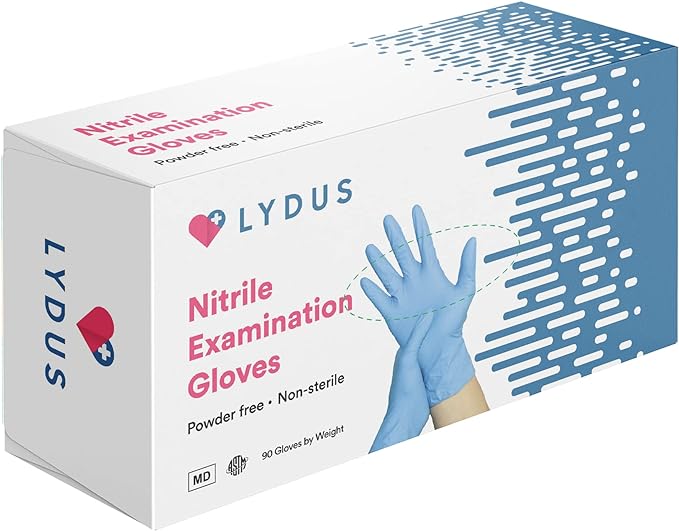
- Lydus 5 mil Blue Nitrile Examination Gloves (LBN5) - ASTM D6319-certified, FDA 510k cleared, case of 1,000. A reliable 5 mil option for extended chairside procedures where added thickness reduces puncture risk during instrument handling.
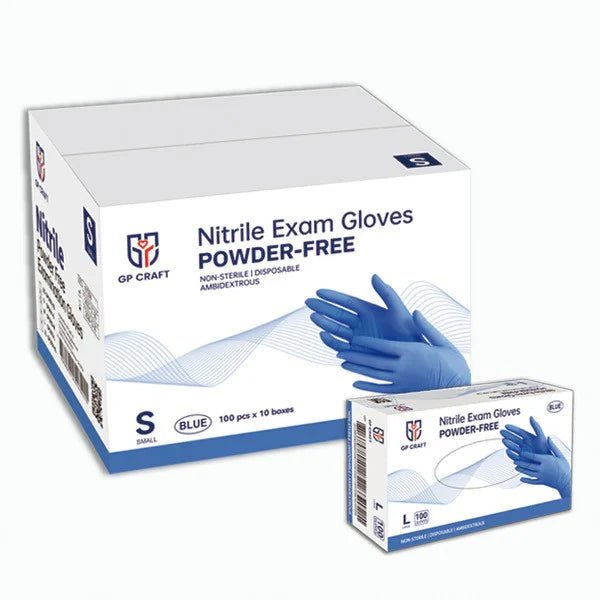
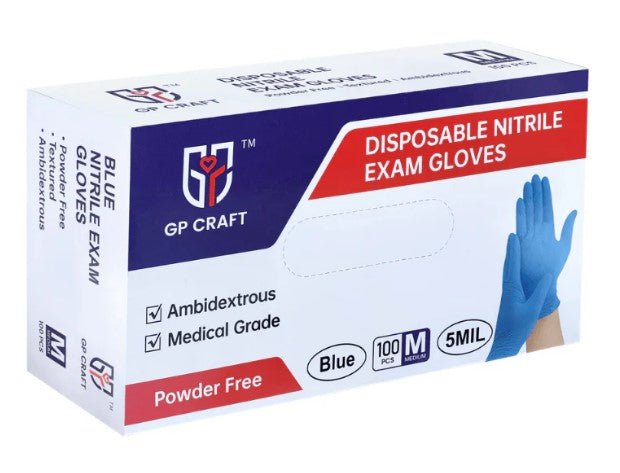
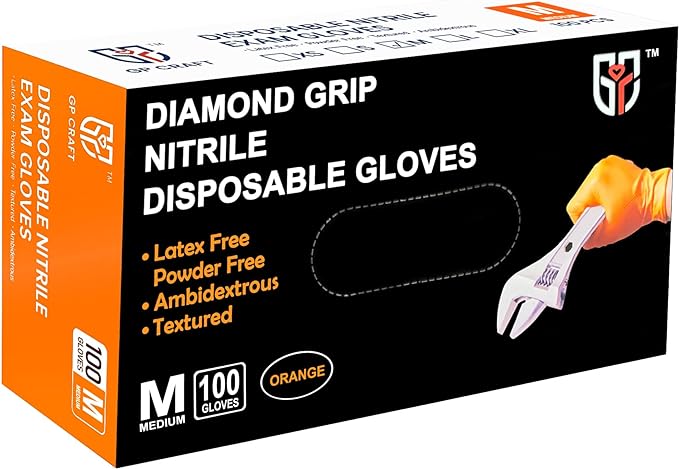
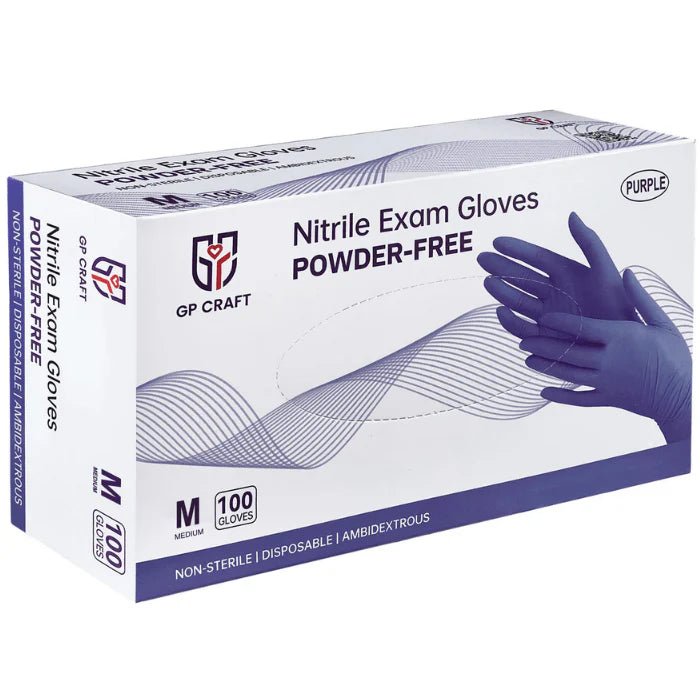
- GP Craft 4 mil Blue Nitrile Exam Gloves (GP40) - Powder-free, case of 1,000. A practical mid-weight option for routine exams and hygiene appointments.
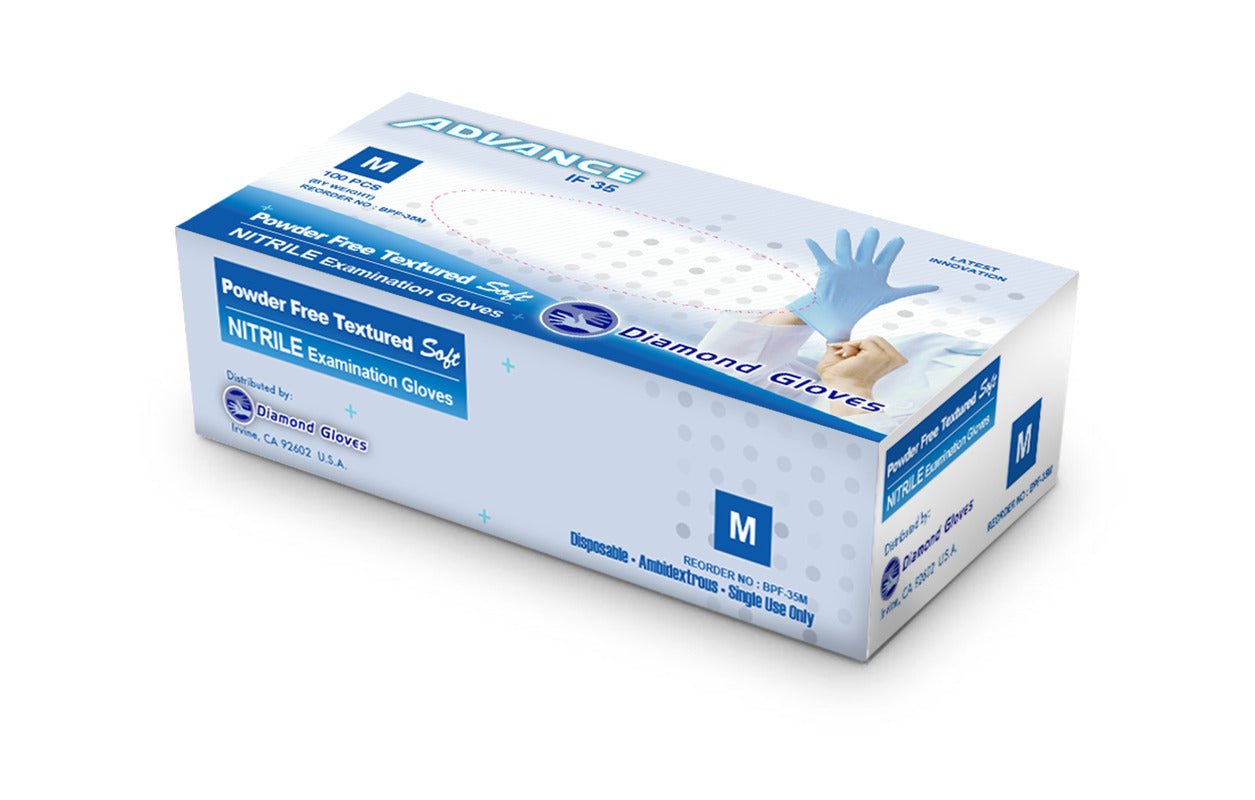
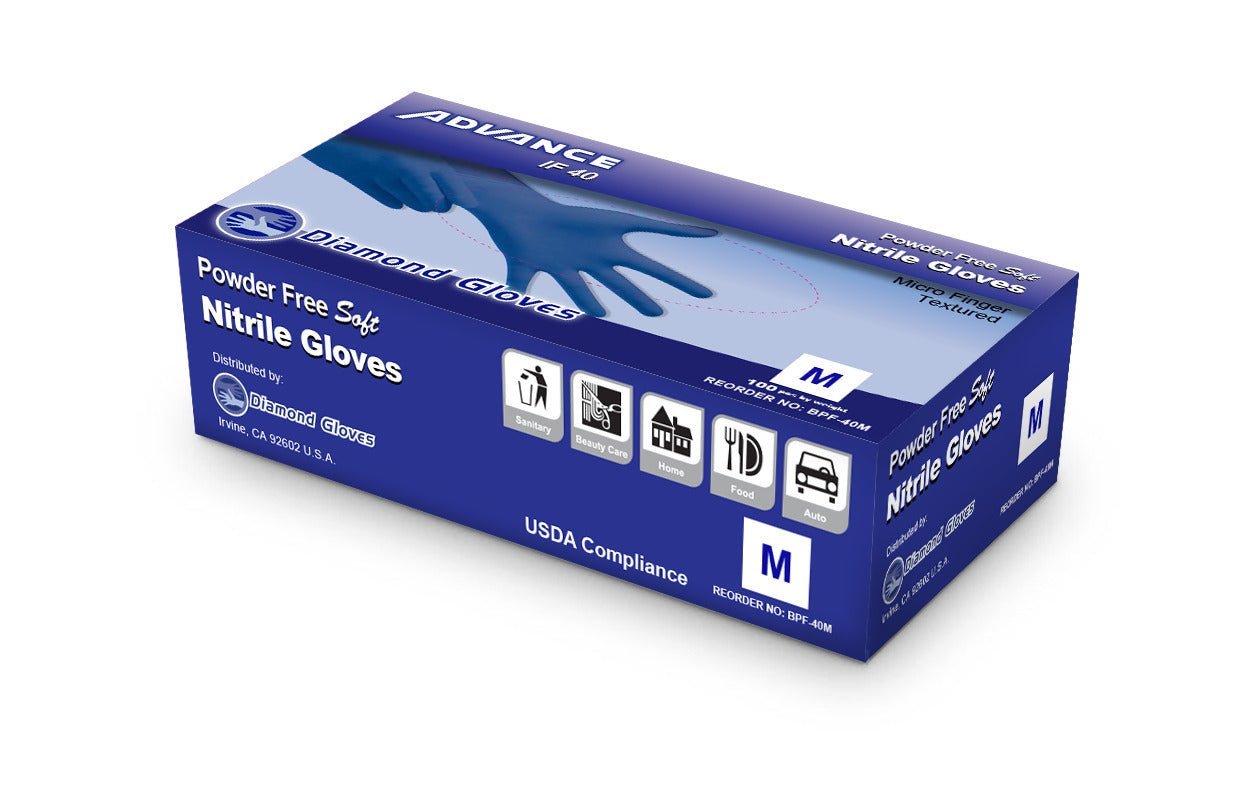
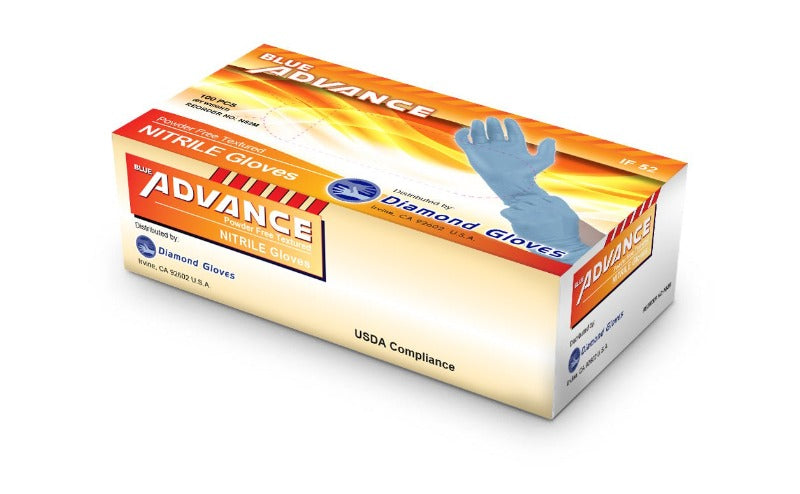
- Diamond Blue 3.5 mil Nitrile Exam Gloves (IF35) - Case of 1,000. The thinnest option in the collection, engineered for maximum dexterity during high-sensitivity diagnostic tasks.
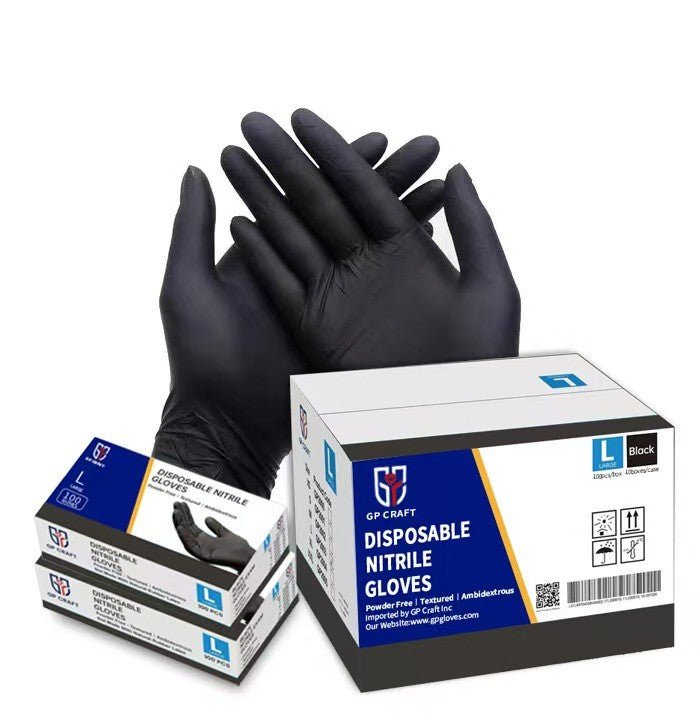
- GP Craft 4 mil Black Nitrile Exam Gloves (GP48) - Powder-free, case of 1,000. Black finish is favoured in practices where composite or amalgam staining on the glove needs to be visible at a glance.
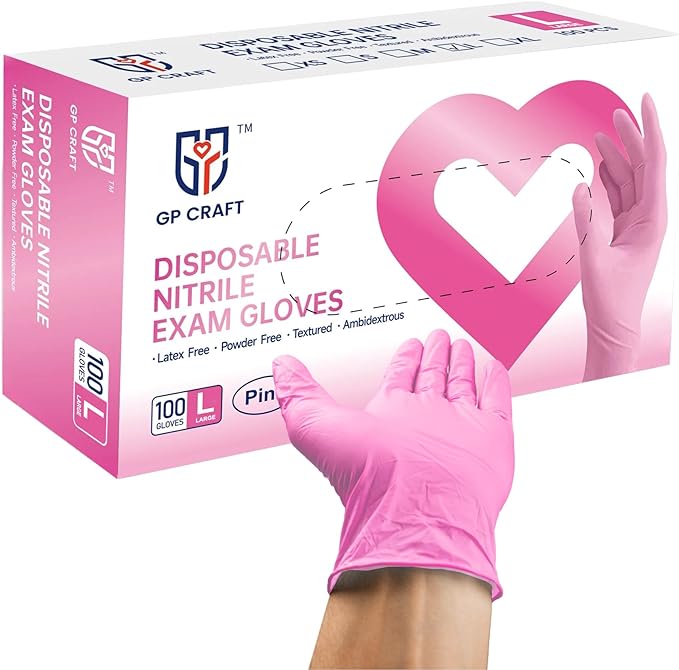
- GP Craft 3.5 mil Pink Nitrile Exam Gloves (GP35P) - Powder-free, case of 1,000. Colour-coded option for practices that separate exam and utility roles by glove colour.
- Great Glove Biodegradable Nitrile Gloves (BIO-SNM5) - Powder-free, case of 1,000. A purpose-built choice for sustainability-focused or eco-certified practices that does not compromise on exam-grade performance.
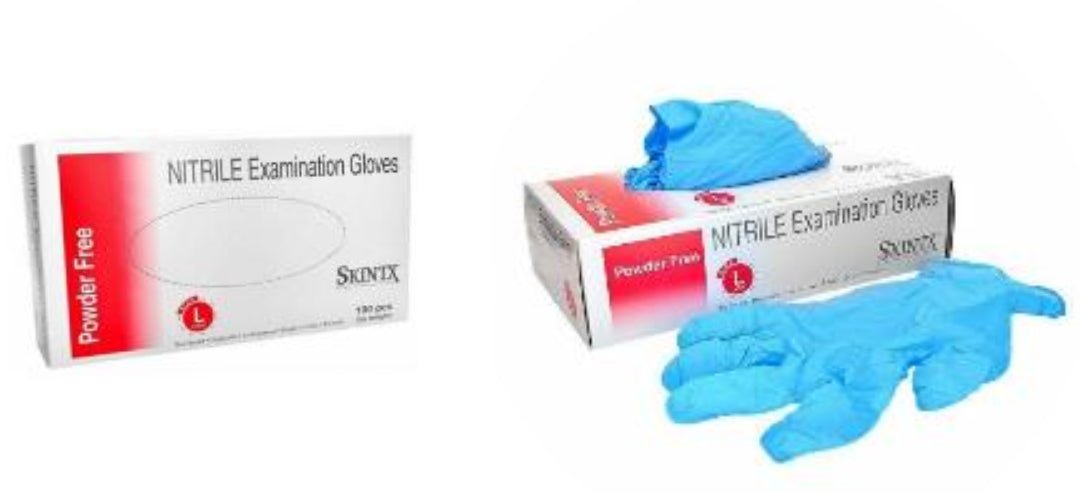
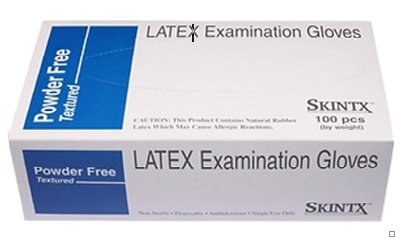
- SkinTx 5 mil Blue Nitrile Gloves (500xx) - Powder-free, case of 1,000. Extended cuff and thicker gauge designed for procedures involving direct chemical exposure.
- First Glove Volt 6 mil Blue Nitrile Exam Gloves - Powder-free, case of 1,000. The heaviest nitrile exam option in the collection, suited to procedures requiring maximum barrier protection.
Latex Exam Gloves
Natural rubber latex retains a clinical role where neither staff nor patients have a latex sensitivity concern, offering tactile feedback that many experienced practitioners prefer.
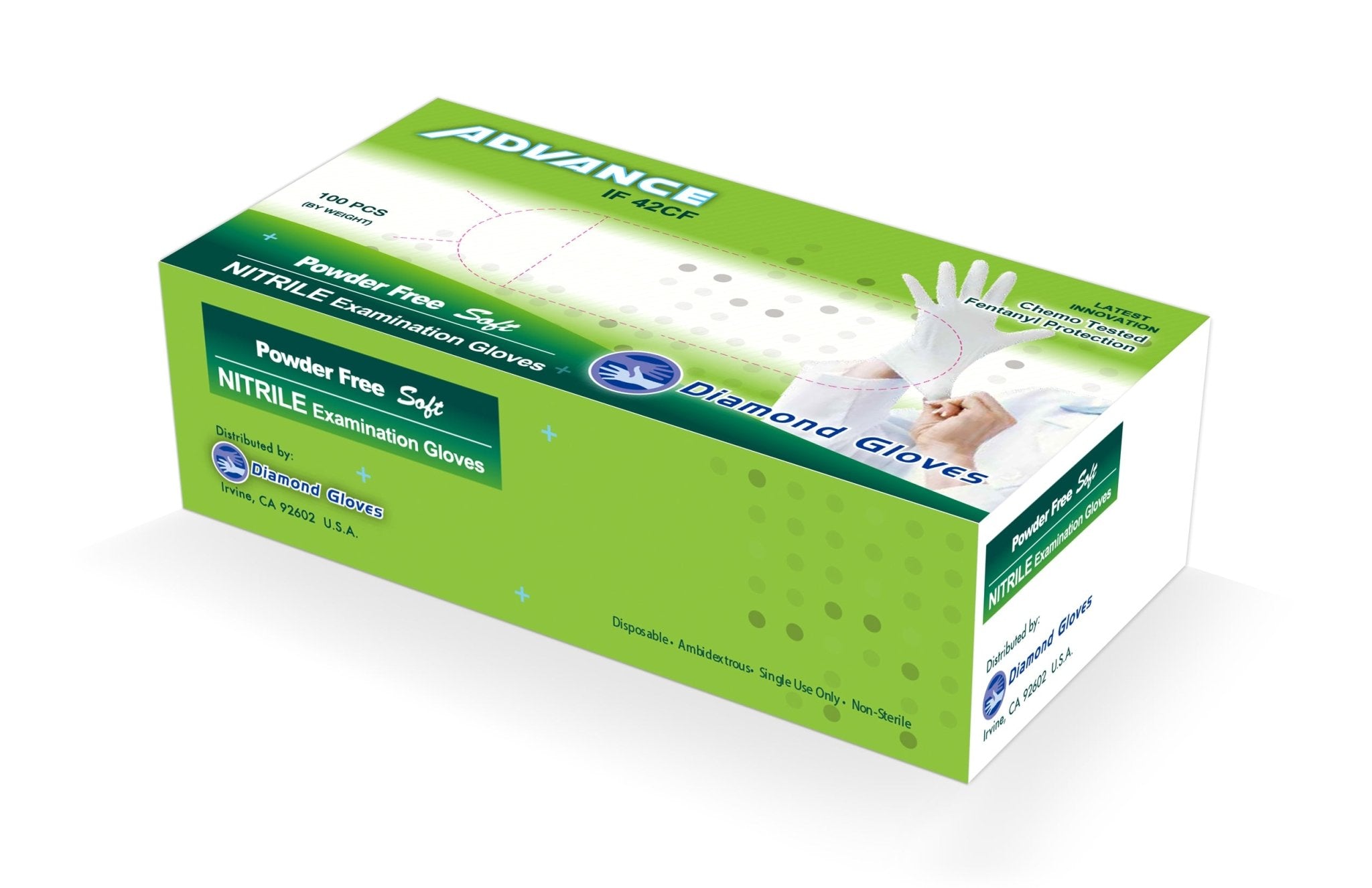
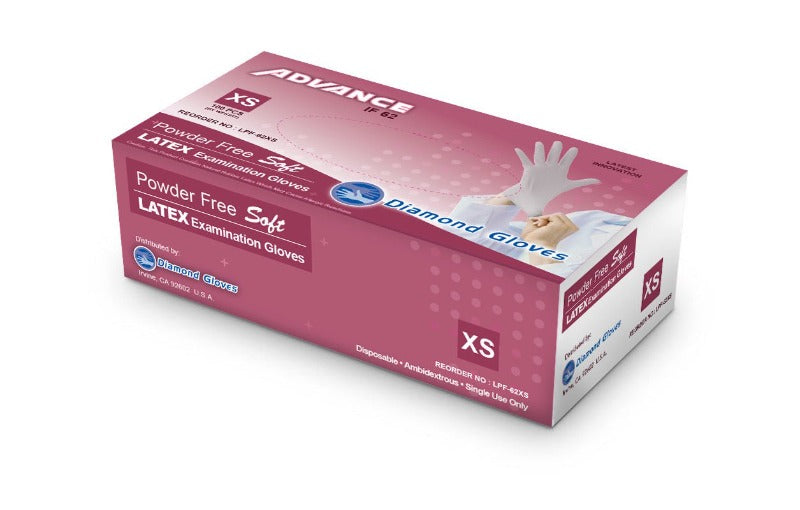
- Diamond 6 mil Latex Examination Gloves (IF62) - Case of 1,000. Heavy gauge for procedures where extra tear resistance and long wear duration are priorities.
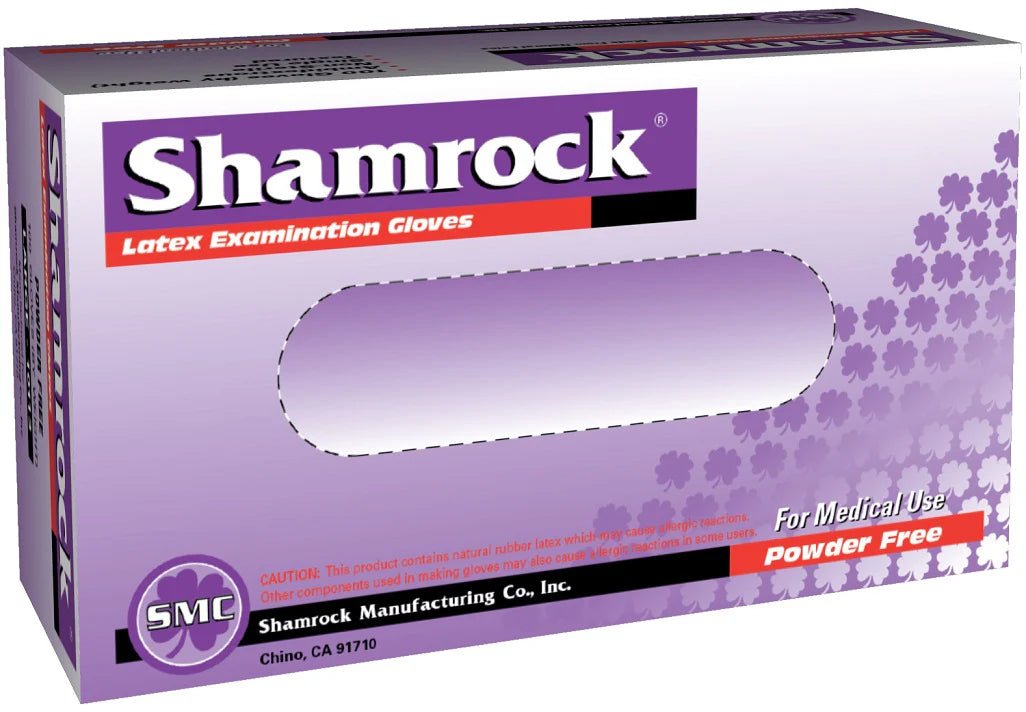
- Shamrock 5 mil Latex Exam Gloves - Powder-free, full-textured, medical and food safe, case of 1,000. A high-grip latex option well suited to scaling and polishing workflows.
- SkinTx 6 mil Latex Examination Gloves (900xx) - Powder-free, case of 1,000. Full-length cuff for additional wrist and forearm coverage.
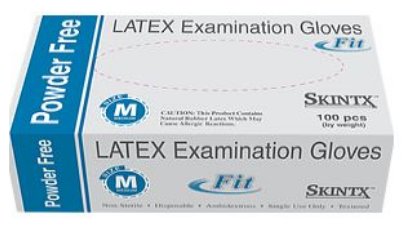
- SkinTx FIT 5 mil Latex Examination Gloves (900FIT) - Powder-free, anatomically shaped to reduce hand fatigue during longer procedures.
How to Choose the Right Dental Exam Gloves
Glove selection in a dental practice involves more variables than material preference alone. Procedure type, procedure duration, chemical exposure, staff sensitivity status, and individual fit all shape the right decision. The framework below covers each dimension.
Material: Nitrile vs Latex
Nitrile and latex each have a defined role in dental settings, and the right choice depends on your practice's clinical profile.
Nitrile offers excellent barrier performance against the chemicals routinely encountered chairside - composite resins, bonding agents, phosphoric acid etchants, and surface disinfectants. It carries zero latex allergen risk, which is relevant both for staff occupational health and for patient safety. Tactile sensitivity is high, particularly at 3.5 mil and 4 mil, though it decreases slightly at gauges above 5 mil. Puncture resistance is strong across the range.
Latex offers the highest natural tactile sensitivity and elasticity, qualities that experienced operators working with fine dental instruments often cite as advantages. Its limitation is significant: natural rubber latex proteins are associated with a risk of Type I hypersensitivity reactions in both staff and patients. This is a documented clinical, occupational health, and liability consideration that cannot be managed simply by staff tolerance - patient latex allergy status must also be accounted for in your intake screening process.
In short, nitrile dental exam gloves are the appropriate default for most practices. Latex remains a valid choice only where no latex sensitivity is confirmed across the full team and patient population, and only after a review of your infection control policy.
Thickness (mil) by Procedure Type
Mil thickness is the most misunderstood selection variable in dental glove procurement. Thinner gloves are not inferior - they serve different tasks, and matching thickness to procedure is the key decision.
At 3.5 mil, gloves deliver maximum dexterity and tactile sensitivity. This is the appropriate specification for periodontal charting, impression-taking, and detailed examination work where finger sensitivity directly affects clinical accuracy. The trade-off is lower puncture resistance, which makes 3.5 mil gloves less suitable for procedures involving sharp instrument handling.
At 4 mil, gloves strike a practical balance between dexterity and protection. This is the most versatile specification for dental practices and suits routine hygiene appointments, scaling, patient exams, and general restorative work. Most teams that run a single glove specification across the clinic default to 4 mil.
At 5 mil, gloves provide a more robust chemical barrier. This thickness is well matched to composite placement, adhesive bonding, and etchant application, where repeated contact with resins and acids over a full day of appointments makes extra barrier protection worthwhile. There is a marginal reduction in fine-motor sensitivity relative to 4 mil, though most practitioners adapt quickly.
At 6 mil and above, gloves are designed for procedures and tasks where durability and chemical resistance outweigh the need for dexterity. Extended surgical-adjacent procedures, sterilisation workflows, heavy chemical handling, and instrument reprocessing all fall into this category. These are not appropriate for precise chairside work.
In short, most chairside dental work is best served by 4 mil or 5 mil dental exam gloves. Reserve 3.5 mil for high-sensitivity diagnostic tasks and step up to 6 mil or above for utility and sterilisation duties.
Understanding ASTM D6319 and FDA 510k Clearance
Products in this collection carrying the ASTM D6319 designation have been manufactured and tested to the American Society for Testing and Materials standard for nitrile rubber gloves used in medical examination. This standard defines minimum tensile strength, elongation at break, and Acceptable Quality Level (AQL) defect thresholds, giving procurement teams and infection control officers a verifiable, documented quality benchmark for purchasing and audit purposes.
Where a product additionally holds FDA 510k clearance (as noted in the individual product title for the Lydus LBN5), it has completed the FDA's premarket review process for a Class II medical device designation. This is distinct from general PPE certification and is relevant where your practice's infection control policy or accreditation body requires FDA-cleared examination gloves.
One important distinction: ASTM D6319 applies to examination gloves, not surgical gloves. The surgical glove standard is ASTM D6193. Exam gloves must not be substituted for sterile surgical procedures requiring ASTM D6193-compliant gloves.
Dental Nitrile Gloves: Why Nitrile Dominates Modern Dental Practice
The shift toward dental nitrile gloves across the profession over the past two decades reflects sound clinical reasoning and evolving risk management standards, not simply product availability.
Latex allergy compliance. Infection control guidance recommends that dental facilities evaluate non-latex alternatives, particularly where staff sensitisation has been identified or where patient latex allergy is documented or suspected. Nitrile eliminates the Type I hypersensitivity risk associated with natural rubber latex proteins, removing a variable from the clinical environment and simplifying patient intake screening.
Chemical compatibility with dental materials. Dental procedures involve routine contact with composite resins, bonding agents, phosphoric acid etchants, surface disinfectants, and impression materials. Nitrile provides a more reliable barrier against these substances than latex, which can degrade on prolonged or repeated contact with certain organic solvents and dental chemicals. This matters both for glove integrity during the procedure and for the long-term skin health of practitioners who glove and deglove multiple times across a full clinical schedule.
Colour coding for workflow management. The availability of blue, black, and pink nitrile across this collection serves a practical function beyond aesthetics. Many practices use colour to differentiate exam gloves from utility-weight options, or to signal which gloves are designated for which team member roles. Black nitrile is particularly useful in restorative-heavy practices: composite and amalgam contamination is more visible on a dark glove surface, making it easier to confirm a clean field before instrument transfer.
Biodegradable nitrile for sustainability-focused practices. The Great Glove BIO-SNM5 introduces a biodegradable nitrile formulation - a category the broader dental supply market has been slow to address. For DSOs or individual practices working toward green clinic certification or environmental impact commitments, this option delivers exam-grade performance without compromising sustainability goals. It is available by the case of 1,000 and carries the same powder-free specification as the standard nitrile range.
Utility Gloves for Dental Practices: A Separate Category from Exam Gloves
Utility gloves dental teams use for reprocessing, cleaning, and sterilisation work form a distinct category from chairside exam gloves, and the two should not be interchanged.
Instrument reprocessing, surface disinfection, chemical preparation for sterilisation units, and clinical waste handling all create exposure risks that a 3.5 mil or 4 mil exam glove is not built to withstand. At those thicknesses, contact with sharp instruments carries a meaningful puncture risk, and prolonged exposure to heavy-duty disinfectants and enzymatic detergents will degrade a standard exam-weight glove faster than the task demands.
Utility-grade options in this collection - the GP Craft 8 mil Orange Nitrile Industrial Gloves (GP68) and GP Craft 6 mil Black Nitrile Exam Gloves (GP51) - are suited to the higher-demand conditions of a sterilisation bay. At 6-8 mil, these gloves offer markedly better resistance to puncture from instrument tips and longer chemical contact time before barrier degradation becomes a concern.
When purchasing utility gloves for a dental practice, three points are worth confirming before placing a bulk order. First, verify that the glove material is compatible with the specific enzymatic detergents and surface disinfectants used in your sterilisation area - manufacturer chemical compatibility charts are the reference source for this. Second, utility-weight gloves are not for chairside examination use; their thickness reduces tactile sensitivity to a degree that is unsuitable for precise clinical work. Third, where staff perform manual instrument scrubbing, 6-8 mil provides substantially better sharps injury protection than a standard exam-weight glove, which is a meaningful occupational health consideration for reprocessing teams handling endodontic files, scalers, and burs.
Practices sourcing both exam and utility gloves in a single order can browse the broader range via the health and medical gloves collection, or use the Glove Match Tool to narrow by role and task.
Dental Gloves by Role: Matching Spec to the Clinical Team
Different members of the dental team have distinct hand protection requirements, and a single glove specification rarely serves everyone equally well.
Dentists and restorative specialists handling composites, bonding agents, and etchants benefit most from 4-5 mil nitrile. The chemical resistance of nitrile is the key factor here - repeated contact with adhesive systems and etching agents through a thin glove over a full clinical day carries a cumulative skin exposure risk that a thicker gauge mitigates.
Dental hygienists performing scaling, root planing, and polishing typically prioritise dexterity and grip. A 3.5-4 mil nitrile or a full-textured latex option works well for this role, where fine tactile sensitivity matters for instrument placement and calculus detection.
Dental assistants working across tray setup, suction, and instrument transfer benefit from a 4 mil general-purpose nitrile option - versatile enough for the varied tasks of the role without the cost of a specialist grade.
Sterilisation and instrument reprocessing staff should not use exam-weight gloves as their primary hand protection in the reprocessing bay. A dedicated 6-8 mil utility-weight nitrile is the appropriate specification for this role, supplementing any exam gloves worn during chairside assistance.
Why Buy Dental Gloves at AP Medical Supply
AP Medical Supply offers dental gloves across six brands, four mil thicknesses, and three material types - all in wholesale cases of 1,000. The catalogue includes ASTM D6319-tested and FDA 510k-cleared options (listed at the individual product level for the specific SKUs carrying those designations), a biodegradable nitrile line for sustainability-focused teams, and heavy-duty utility weights for sterilisation workflows. Orders over $200 qualify for free shipping. For procurement teams comparing specifications across multiple procedure types or staff roles, the Glove Match Tool provides a structured, guided selection process without requiring a sales call.
Frequently Asked Questions
What is the difference between dental exam gloves and surgical gloves?
Dental exam gloves are certified to ASTM D6319 (nitrile) or equivalent standards for examination use. Surgical gloves meet the stricter ASTM D6193 standard, are individually sterile-packaged, and are required for procedures involving sterile tissue entry. Routine dental examinations, hygiene appointments, and restorative procedures use exam gloves, not surgical gloves.
Are all dental gloves in this collection powder-free?
Yes. Every glove in this collection is powder-free. The FDA banned powdered medical gloves in the United States in 2017 due to documented risks including airway sensitisation and post-surgical complications. No powdered examination gloves are stocked.
What mil thickness should a dental practice order as its standard glove?
For most chairside dental procedures - examinations, hygiene, restorative, and orthodontic work - 4 mil is the practical standard. Practices with significant composite and bonding workloads often step up to 5 mil for better chemical barrier performance. Use 3.5 mil where tactile sensitivity is the priority for a specific task.
Can latex dental gloves still be used safely?
Yes, where neither staff nor patients have a documented or suspected latex allergy. Given the prevalence of latex sensitisation in the general population, many practices default to nitrile as the lower-risk standard. Review your infection control policy and patient intake records before ordering latex.
What does ASTM D6319 mean on a dental glove product?
ASTM D6319 is the American Society for Testing and Materials standard for nitrile rubber examination gloves. It specifies minimum tensile strength, elongation at break, and Acceptable Quality Level (AQL) defect thresholds - a verifiable quality baseline for infection control audits and purchasing documentation.
Are exam-weight gloves appropriate for instrument reprocessing?
No. Standard dental exam gloves (3.5-5 mil) are not designed for sterilisation and reprocessing tasks. A 6-8 mil utility-weight nitrile provides the sharps resistance and chemical contact tolerance that reprocessing workflows require.
Does AP Medical Supply offer free shipping on dental glove orders?
Orders over $200 qualify for free shipping. Cases of 1,000 gloves typically meet this threshold for most SKUs in this collection.