
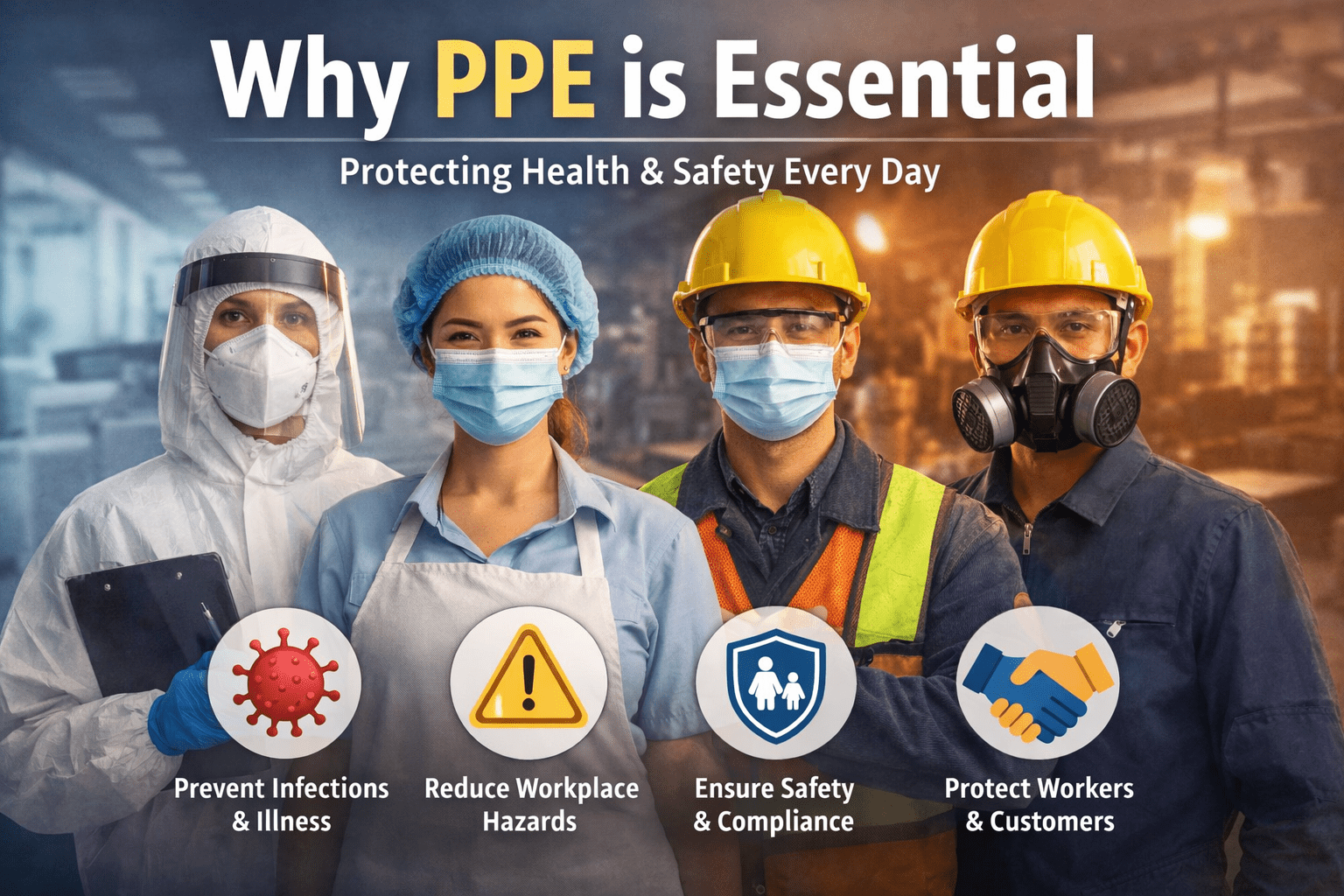
Protective apparel is a critical component of personal protective equipment (PPE), designed to create a barrier between workers and potential hazards. From healthcare and laboratories to food processing and industrial environments, the right protective apparel helps reduce the risk of contamination, infection, and exposure to harmful substances.
In this guide, we’ll break down the most common types of protective apparel, where they’re used, and how to choose the right option for your application.
What Is Protective Apparel?
Protective apparel refers to disposable or reusable garments worn over regular clothing to protect both the wearer and the environment. These products are commonly used to:
-
Prevent cross-contamination
-
Protect against fluids, splashes, and particulates
-
Maintain hygiene and regulatory compliance
-
Enhance workplace safety
Protective apparel is widely used in healthcare, food service, pharmaceuticals, manufacturing, laboratories, cleanrooms, and industrial facilities.
👉 View all protective apparel products:
https://apmedsupply.com/collections/protective-apparel
Types of Protective Apparel and Their Uses
Isolation Gowns
Isolation gowns are designed to protect the wearer’s torso and arms from fluid exposure and contamination.
Common uses:
-
Hospitals and clinics
-
Long-term care facilities
-
Medical examinations and procedures
-
Infection control environments
Key features to consider:
-
Fluid resistance level
-
Disposable vs reusable
-
Tie-back or hook-and-loop closures
👉 Shop isolation gowns:
https://apmedsupply.com/products/disposable-isolation-gown
Coveralls
Coveralls provide full-body protection, covering the torso, arms, legs, and sometimes the head and feet. They are ideal for environments where higher levels of exposure are possible.
Common uses:
-
Industrial and manufacturing facilities
-
Hazardous material handling
-
Pharmaceutical production
-
Cleaning and sanitation operations
Key features to consider:
-
Breathability vs barrier protection
-
Hooded vs non-hooded designs
-
Zipper closures and elastic cuffs
👉 Shop coveralls:
https://apmedsupply.com/products/microporous-coveralls-with-hood-and-boot-coverscase-of-25
Shoe Covers
Disposable shoe covers help prevent contaminants from being tracked into clean or sensitive environments.
Common uses:
-
Hospitals and surgical centers
-
Cleanrooms and laboratories
-
Food processing facilities
-
Construction and renovation sites
Key features to consider:
-
Slip resistance
-
Elastic fit
-
Material durability
👉 Shop shoe covers:
https://apmedsupply.com/products/blue-shoes-covers-case-of-500
Bouffant Caps and Head Covers
Head covers, including bouffant caps, are used to contain hair and reduce the risk of contamination.
Common uses:
-
Food service and food production
-
Healthcare and operating rooms
-
Laboratories and cleanrooms
-
Pharmaceutical manufacturing
Key features to consider:
-
Breathable materials
-
Latex-free elastic bands
-
Proper sizing and coverage
👉 Shop head covers:
https://apmedsupply.com/products/bouffant-cap-case-of-1000
Beard Covers
Beard covers are essential in environments where facial hair could pose a contamination risk.
Common uses:
-
Food processing and packaging
-
Cleanrooms and labs
-
Pharmaceutical facilities
Key features to consider:
-
Secure elastic fit
-
Lightweight, breathable materials
-
Compatibility with face masks
👉 Shop beard covers:
https://apmedsupply.com/products/18-white-beard-covers
How to Choose the Right Protective Apparel
When selecting protective apparel, consider the following factors:
-
Industry requirements – Healthcare, food service, and industrial environments all have different compliance standards.
-
Level of exposure – Determine whether protection against fluids, particulates, or full-body exposure is needed.
-
Comfort and fit – Breathability and proper sizing improve compliance and productivity.
-
Disposable vs reusable – Disposable apparel reduces cross-contamination and laundering costs.
-
Compatibility with other PPE – Ensure apparel works seamlessly with gloves, masks, and face shields.
Protective Apparel and Regulatory Compliance
Protective apparel may be subject to various standards depending on its intended use, including:
-
FDA regulations for medical environments
-
Food safety and hygiene guidelines
-
Workplace safety standards
Using appropriate protective apparel helps organizations meet regulatory requirements while maintaining a safe working environment.
Why Source Protective Apparel from AP Medical Supply?
At AP Medical Supply, we offer a comprehensive range of protective apparel designed to meet the needs of healthcare providers, food service operators, and industrial businesses.
Why customers choose us:
-
Reliable, high-quality PPE
-
Competitive bulk pricing
-
Consistent supply and fast shipping
-
One-stop solution for gloves, apparel, and diagnostic test kits
👉 Browse our full protective apparel collection:
https://apmedsupply.com/collections/protective-apparel
Need help choosing the right protective apparel?
Our team can help you select the most appropriate PPE based on your industry, application, and volume requirements. Contact us to learn more about bulk ordering and tailored solutions.